
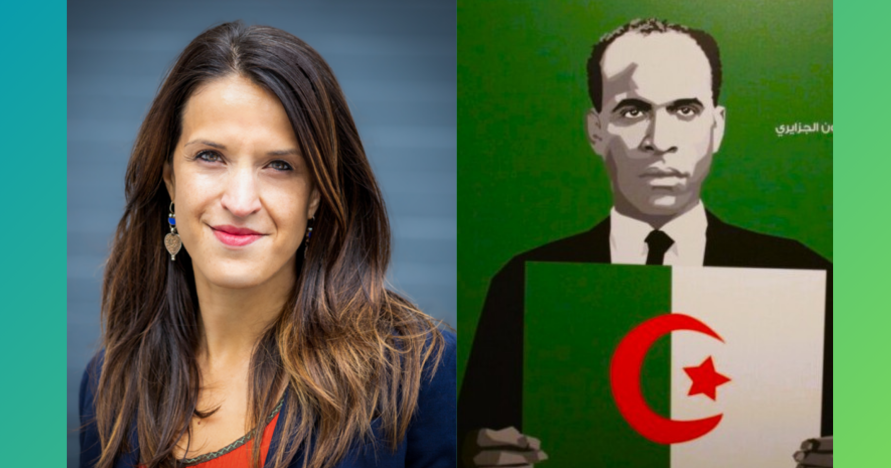
"Frantz Fanon and the Struggle to Define Algerian Culture after Independence" Muriam Haleh Davis, Associate Professor of History, UC Santa Cruz
Abstract:
Although an active supporter of the country's liberation struggle from French rule, Frantz Fanon (1925-61) did not live to see an independent Algeria. Nor was he part of the ensuing debates on national culture that animated the years after 1962. Fanon's writings nevertheless became a touchstone in a number of polemics that marked the Presidency of Ahmad Ben Bella (1962-1965). During these years, Fanon was canonized by the regime as it sought to build an independent state, economy, and culture.
One of the most public disagreements in which Fanon was invoked concerned the future of “national culture.” This polemic, which played out between historians and cultural officials, hinged on whether the Martinican psychiatrist represented a foreigner irresponsibly parroted by the Algerian intelligentsia, or a comrade who understood the necessity of anti-colonial praxis. Fanon was also invoked in discussions regarding the nationality code, as Algerians debated the status of Europeans in the new nation-state.
This presentation will show how debates over Fanon's legacy in Algeria exposed myriad attempts to establish the parameters for national belonging and the ways in which the Algerian nation would be defined in the era of independence.