
Watching the watcher
By Nikki Babri
Most stories about racial passing feature a light-skinned Black person slipping undetected into the white world and living with the fear of being found out. UC Irvine Professor of African American Studies Sandra Harvey is more interested in the watchers.
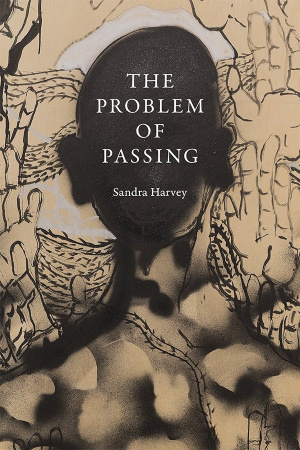
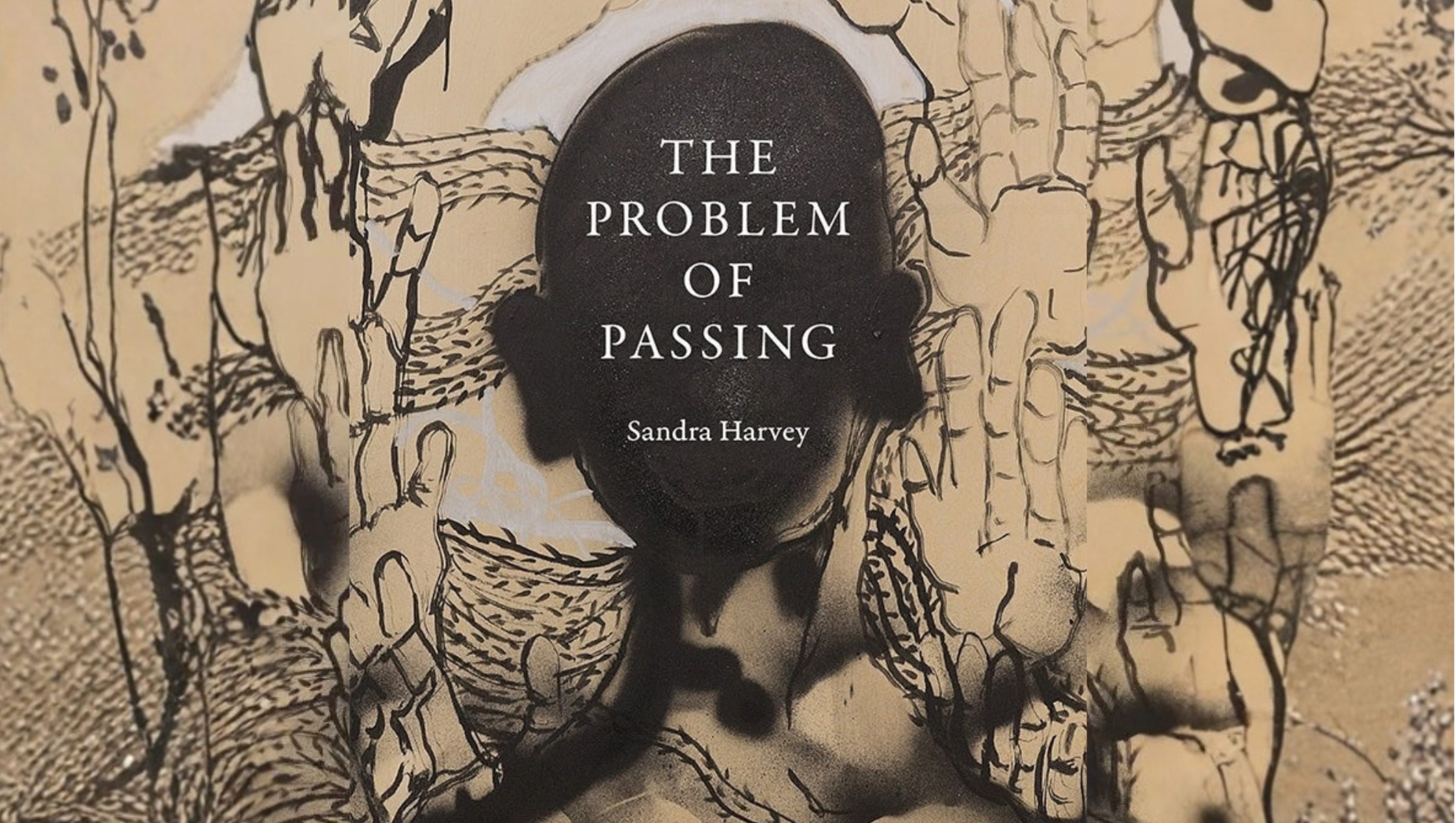
In her new book, The Problem of Passing (Duke University Press, 2026), Harvey turns attention away from the suspected passer and toward the suspicion itself. “Black studies is generally no longer very concerned with the problem of passing,” Harvey writes in the book’s opening line.
For decades, passing has largely been treated by Black studies scholars as a relic of a bygone era, a strategy made obsolete by civil rights activism. In its place, many scholars turned to the problem of hypervisibility, tracing how the inability to escape the scrutiny of the state leaves Black people vulnerable to violence.
Harvey argues that the two are not separate problems. Passing narratives, she writes, “are at the core of past and present-day violence toward all Black subjects,” and reveal as much about the people doing the watching as the people being watched.
Resurrecting forgotten frameworks
Harvey’s path to the book began long before she started writing it. She remembers in 1992, when a bystander recorded Los Angeles police officers beating Rodney King. She was just starting high school, and she describes it as a coming-of-age moment.
“The media did the work of depicting King as a less-than-perfect victim,” she recalls. Despite this, many people in the Black community believed the video would finally force accountability. “Of course, that didn’t happen,” says Harvey. Stop-and-frisk policies instead reinforced the surveillance of Black people, and by the time Harvey was in graduate school, video evidence of police brutality had become commonplace.
Decades later, she attended a panel on the topic of passing. The conference took place about a week after George Zimmerman killed 17-year-old Trayvon Martin. The panel’s chair opened with a caveat, asking attendees to keep in mind those most vulnerable to policing: people who could never pass.
“The chair’s comment struck me so profoundly because I could not shake that the two were related,” Harvey says. “On the one hand, passing as the idea that some people (particularly ‘visibly’ black people) couldn’t pass if they wanted to. On the other hand, the seemingly anxious compulsion of the state to police and surveil those who were supposed to be so obviously detectable in the first place.”
Turning the spotlight around
Most scholarship on passing focuses on the person suspected of it – the “other.” It questions who could pass and what they stood to gain. Harvey wanted to look in the other direction.
“What gets left out of the conversation or what doesn’t often get interrogated is the accusation itself,” she says. “With this book I wanted to turn the spotlight back on the suspicious eye of the accuser, on all the anxiety, frustration, elation and self-righteousness that is just under the surface of calling someone out.”
In the book, the word itself takes on new meaning; not only is it something a person does, passing is something that can be done to a person. Harvey reframes passing as a set of “reader relations” between the one watching and the one being read. Stories about passing, she argues, carry a contradiction. They reassure the watcher that Blackness is obvious and easy to spot, while also warning that it can slip away at any moment.
Scenes of suspicion
Trained as a political theorist, Harvey set out to write a book driven by philosophical questions around what it means to actually “know.” Across four chapters, she drew on historical archives, law, science and conceptual art to examine moments not usually understood as stories about passing.
“At the heart of the book is an insistence to not look for passing where it is already anticipated,” she says. “I felt the need to turn that question back on itself and look for passing again where it slipped into the story unexpectedly, in the narratives that assumed no nuance was needed.”
She begins with the “pass laws” of colonial Virginia, which, by the end of the 18th century, required almost exclusively Black people to carry documentation proving they had permission to exist beyond their masters’ property. Any white person had the authority to demand to see these documents. Runaway advertisements written by slave owners described escapees as “forging a pass,” and the fraudulence of the paper shifted from the pass to the person carrying it.
The same logic was used against Native communities as a way to dispossess Natives of their rightful land. While researching post-Civil War Choctaw Nation citizenship applications, Harvey encountered scores of applicants who were rejected because they were suspected of being Black or Afrodescendants. Digging through scant archives to uncover who the applicants really were, she found herself reproducing the very framework she set out to critique.
“I had begun to ask, ‘Wait, are these applicants actually passing?’” she recalls. “I went in circles before realizing that I had become a ‘hunter/knower.’ Even in wanting to excavate the truth for an anti-colonial cause, I reinscribed the notion of blackness as fugitivity and fraud.”
Another chapter turns to a 1966 laboratory where geneticist Stanley Gartler revealed that the HeLa cell line, derived from a biopsy taken from Henrietta Lacks and used in biomedical research worldwide, had contaminated other cell cultures. Lacks’s cancer cells had been taken without her consent and, due to their rare ability to reproduce indefinitely, have been responsible for major medical breakthroughs, from the polio vaccine to COVID-19 treatments. Researchers were angry; they believed they were studying different samples but had unknowingly been working with HeLa cells the whole time. The very cells of a Black woman had passed themselves off as something they were not.
Moving beyond race

Passing is now understood to apply to almost anyone and has been generalized to the act of impersonating a normative identity to access benefits that would otherwise be denied. Disability, trans and immigration studies have all taken up the idea, Harvey notes, but often without examining its roots in the policing of Black people. Narratives about passing for cisgender, straight or able-bodied all carry assumptions about Blackness at their core, she contends, even the ones that appear to have nothing to do with Black people at all.
“The claim of passing originates in the eye of the beholder,” Harvey says. She points to attacks questioning the gender of Michelle Obama, Serena Williams and South African runner Caster Semenya as prime examples. None of these women had claimed to be something they weren’t, yet the public decided they were lying. “Blackness is at the core of accusations about these women’s proper gender,” Harvey explains. Because gender has long been measured against a white ideal, even Black cisgender people are, in a sense, always passing.
It is why Harvey resists the idea that the field has moved past the subject. “We have not, and so far cannot, move ‘beyond’ this,” she writes, maintaining that Black racial passing remains critical to Black life today and central to the study of every other form of passing.
Passing in the age of surveillance technology
One of the book’s central conclusions is that knowing cannot be separated from policing and surveillance. Understanding technology not as a neutral tool but as something that sets up relationships between those who watch and those who are watched, Harvey argues, helps explain how the old dynamic of master and fugitive keeps reproducing itself.
Asked where she sees that dynamic at work today, she looks to what hasn’t changed with technology. Surveillance has grown more precise, more constant and more difficult to evade, she says, “but the targets have stayed the same.”
“Nor has it changed the brutality, the violence upon those targets,” Harvey adds. “More knowledge does not mean more justice, unfortunately. We get that from Rodney King, from Trayvon Martin and from Sandra Bland.”
Interested in reading more from the School of Humanities? Sign up for our monthly newsletter.