
The surprisingly fraught politics of fengshui
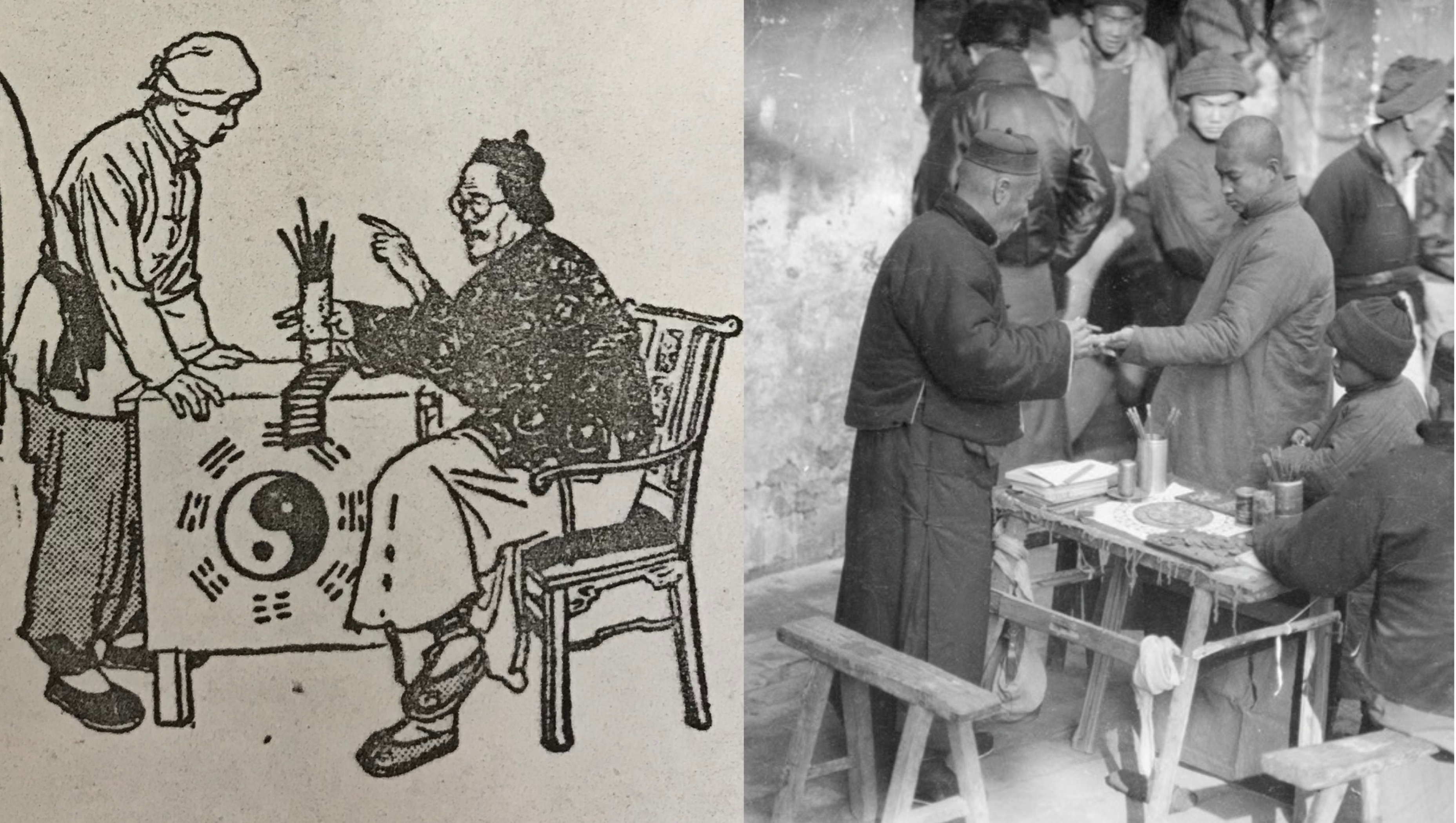
About a decade ago, when UC Irvine Professor of History Emily Baum was living in Beijing, she sometimes walked down a street near the famous Yonghegong Lama temple. This bustling tourist area was lined with fortune tellers offering to divine the future – an ancient Chinese tradition.
But now, those fortune tellers are largely gone. A few years after Baum left, the Chinese Communist Party (CCP) cracked down on the practice as part of its efforts to eliminate superstition.
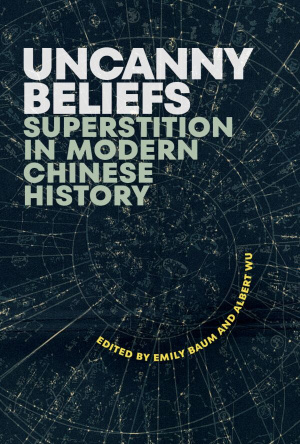
This dramatic government intervention made Baum wonder: Why is superstition such a contentious topic in China, and how did it get that way? And what counts as superstitious, anyway? These questions are explored in a new anthology she coedited, Uncanny Beliefs: Superstition in Modern Chinese History (Harvard University Press, 2026).
Seeking out scholars
Baum has always been drawn to “the blurry boundaries between acceptable and unacceptable behaviors, and how those constraints get navigated.” Her first book, The Invention of Madness: State, Society, and the Insane in Modern China (University of Chicago Press, 2018) examined how psychiatric concepts reshaped traditional Chinese attitudes toward mental illness in the early 20th century.
After publishing that book, she intended to write a book on the rise of Chinese fortune telling with plans to return to China on a Fulbright fellowship. But then the COVID-19 pandemic struck, and her fellowship was canceled. She decided to pivot, transforming the project into an edited volume that would collect essays on the role of so-called superstition in Chinese society – not only fortune telling, but also fengshui, ancestor worship, face reading and spirit writing. These are all practices that the state has tried to suppress, without much success.
Baum connected with another scholar, Albert Wu, an associate research fellow at the Institute of History and Philology in Taipei. They solicited essays via H-Net, an online platform for scholars in the humanities and social sciences, and were deluged with submissions. They also reached out to a few specific scholars. The goal was to encompass a range of themes and time periods.
The contributors come from diverse backgrounds, including anthropology, journalism and religious studies, in addition to history. All of the essays serve a unique purpose in the book, Baum says. “The scholars we invited look at the question from really different vantage points than I myself would have considered.”
The evolution of the campaign against superstition
The modern notion of superstition originated in the West, as part of the Enlightenment. Superstition was considered “a form of ‘bad science,’ a type of irrational belief that obscured the natural, empirical workings of the world,” Baum writes in her introduction.
After the concept was imported to China in the 19th century, authorities began to reinterpret many traditional practices, such as fengshui and communing with the dead, as superstitious. They worried that superstition was holding the country back. Only by eradicating it, leaders believed, could China compete with the West.
From this period onward, governments took different approaches to combating superstition. But the efforts reached their peak with the Communist Party, which rose to power in 1949. “Under socialism, you’re only supposed to believe in material things that you can measure empirically, and superstition was not those things,” Baum explains. “And so anyone who practiced superstition was inherently going against not just the Communist Party, but the ideology of socialism.”
Baum’s chapter in Uncanny Beliefs is titled “Fate, Fatalism, and Superstition in the Early People’s Republic of China.” It begins with the story of a flood that devastated the country’s central region in the autumn of 1954, washing away homes and ruining harvests. Government officials arrived to help rebuild. But, to their frustration, the residents seemed to have no interest in rebuilding; they preferred to go to temples to pray. The government was disturbed by what it saw as their passivity.
Yet Baum goes on to argue that in many cases, this perception was inaccurate: “ordinary people turned to activities like fortune telling and fengshui to alter their fates.” They sought to obtain knowledge and tools that would help them to get what they wanted in life; superstition could be a means of asserting agency, not just a sign of fatalism.
A practical way of looking at the world
Another reason for the authorities’ hostility to these practices is that they elude the state’s control. When the Chinese people continue to rely on these beliefs and customs, it suggests that they do not have full faith in the state or the government to meet all of their needs.
Despite the CCP’s efforts, Baum observes that the practices remain ubiquitous. When she inquires of Chinese friends, they tend to initially deny taking part in them, but then go on to mention seeking advice about an auspicious name for their child, or a date for their wedding. “It’s so ingrained that I don’t think a lot of them are consciously aware of it as a separate sphere of activity,” Baum notes.
Although the crackdown has made it risky to engage in fortune telling out in the open, the services have migrated to more discreet channels, such as apps or phone calls. Some fortune tellers even remain on the street near the temple, although they work furtively, on guard against police surveillance.
Why have Chinese people been so reluctant to give up these practices? One possibility, Baum writes, is that they feel like an antidote to the “spiritual impoverishment” of modern life. “Some people see them as part of a culture, part of a tradition,” she says. “And then I think it’s this belief that it can’t hurt to at least ask someone what an auspicious name for your child is going to be, so why not just give it a try. It’s a very practical way of looking at the world.”
At the intersection of Chinese history and medical humanities
Baum’s work straddles the intersection of Chinese history and medical humanities. In addition to her scholarship, she teaches courses on Chinese history, as well as a graduate seminar called “History of the Body.” She also directs the graduate emphasis in medical humanities and serves as faculty director of the Long U.S.-China Institute, which promotes research and dialogue focused on U.S./China relations.
As she wrapped up work on Uncanny Beliefs, Baum was also close to finishing her next book: Needled: How Acupuncture Conquered America (Viking, 2027), due out next spring. The book looks at a period in the early 1970s when acupuncture made its way from China to the United States, and investigates how American physicians grappled with this foreign but increasingly popular medical modality.
Like madness and superstition, Baum notes, “Acupuncture is right on that boundary between science and pseudoscience, and it gets at all of these questions of how do we determine where that line is drawn?”
As for Uncanny Beliefs, it has garnered positive attention, with an outlet called China Books Review calling it “as relevant to today as to the past.” One point Baum hopes readers will take from the volume is that “the line between ‘science’ and ‘superstition’ isn't as rigid as they might think,” she says. “One era’s superstition can become another’s science, and vice versa.”
Interested in reading more from the School of Humanities? Sign up for our monthly newsletter.