
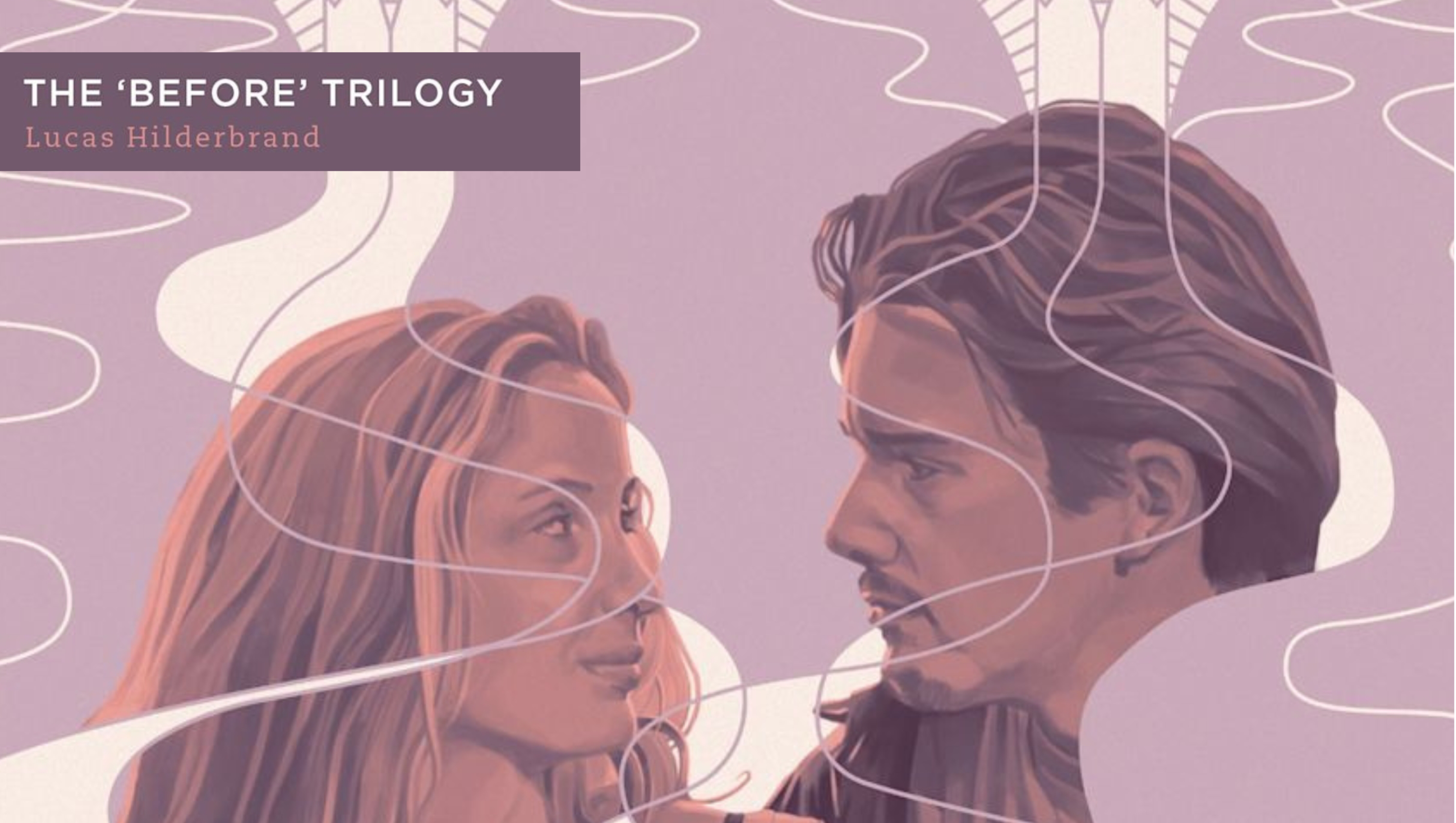
Q&A with film scholar Lucas Hilderbrand
Few films inspire the depth of critical attention and personal devotion that Richard Linklater’s “Before” trilogy has cultivated. Fans don’t just appreciate these films – they measure their own lives against them, revisiting Céline and Jesse’s evolving relationship across Before Sunrise (1995), Before Sunset (2004) and Before Midnight (2013) as if checking in with old companions.
UC Irvine Professor and Chair of Film and Media Studies Lucas Hilderbrand has loved and lived with these films since the first one premiered thirty years ago. In his book The ‘Before’ Trilogy (Bloomsbury Publishing, 2025), he brings his expertise in film and cultural studies to examine why these intimate, conversational films about two people talking and walking through European cities have inspired such passionate adoration.
Join us as Professor Hilderbrand explores what these time-capsule films reveal about connection, nostalgia and the peculiar magic of loving cinema.
What first drew you to this trilogy, and why did you decide to write a book about these films?
I had long felt that the existing writing on cinephilia — which means the love of cinema — largely missed the point of why people love cinema, namely for the vicarious experience of falling in love with characters or with specific movies themselves. The Before Trilogy (Before Sunrise, Before Sunset and Before Midnight) seemed to me a great case study to explore this: these are films that have a core fandom who are affected by and invested in these films, myself included.
Whereas most cinephiles approach the films as auteur works by director Richard Linklater, I wanted to reframe them within different contexts that I hadn’t really seen before. It posed an interesting challenge to write about films I love and rethink the love of cinema itself.

How has your personal connection to the films shaped your scholarly approach to writing about them?
I approached the BFI (British Film Institute) Film Classics book series as a venue for film criticism that’s accessible and relevant to non-scholarly film lover audiences. It’s a long-standing series that has always allowed authors to approach films with their own methods and style, and more recently it’s been expanding the definition of “film classics.”
This gave me a freedom to take a more personal voice, though it’s something that I’ve used as a tool to contextualize my analysis in other things I’ve written. I felt that I couldn’t write about what these films meant to me or the connections I see to other movies without some self-reflection. But mostly, I wanted to give the reader the rush of feelings that the films themselves give viewers. One strategy to replicate that sensation was by using both first- and third-person voice to invite the reader in to share the experience.
How do different generational perspectives change how viewers interpret the trilogy? Why is this generational specificity important to understanding these films?
These films are literal time capsules — in their stories, in their production histories and in their sensibilities. They are avowedly in and of their moments. Students now may have nostalgia for a time they never lived, and if I’m honest, I have nostalgia for it because I did live it. I was in college when the first film came out. We can’t go back to a time before the internet, smart phones and social media. How we connect with people, how we experience time and how we navigate space are fundamentally changed now — mediated in both positive and negative ways. The films still feel recent to me, and the experience of them really places you in their present moments. But the way of life we see in the first film just doesn’t exist anymore — even if Vienna, the city where it is set, looks shockingly the same now as it did then.
I showed Before Sunrise for the first time in my intro class a couple years ago as a test to see if it resonated with students who are a generation (maybe two) younger than me. To my surprise and great relief, not only did they respond well then, but this quarter some of those same students came back to me to say that it is their favorite film because of that class screening.
The film was also just inducted into the National Film Registry of the Library of Congress, which ensures preservation of the film. So it’s been remarkable that it has officially been deemed a classic but still manages to speak to new generations.
The three films were made in nine-year intervals that correspond to real-world time. How does this production timeline impact the films and/or the viewer experience?
There are few precedents for film series that were made in real time, mirroring the passage of time in the story. So, that’s part of what made this series feel unique and special. With these films specifically, the nine-year intervals kept the audience wondering and longing like the characters themselves, particularly for the period between the first and second films. It amplified the emotional stakes for the films — and we felt what the characters felt. I think that’s central to why people who’ve lived with these films have been so invested in the characters’ relationship.
Interested in reading more from the School of Humanities? Sign up for our monthly newsletter.