
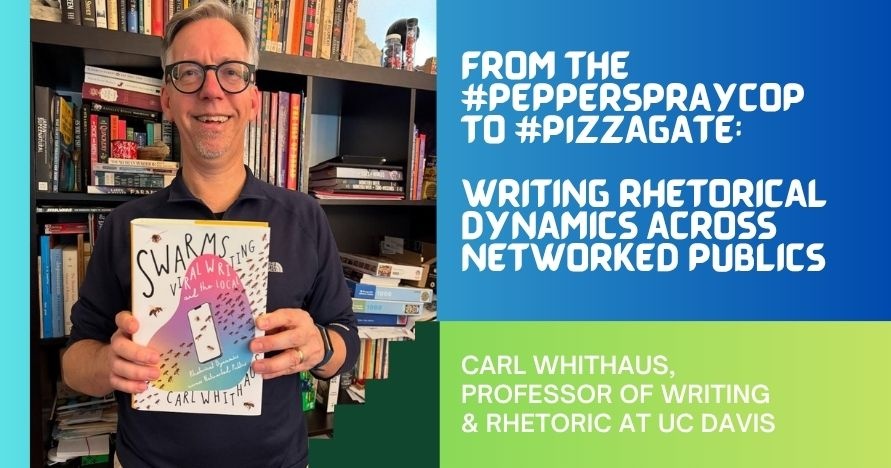
Carl Whithaus Talk: From the #PepperSprayCop to #Pizzagate: Writing Rhetorical Dynamics Across Networked Publics
This section contains archived content made available for reference, research, or recordkeeping purposes. These materials are not actively maintained and may not meet current accessibility standards, such as WCAG 2.1 Level AA. If you need assistance accessing this content or require an accessible format, please contact sohwebmaster@uci.edu. We are committed to ensuring access for all users and will provide accommodations promptly upon request.
This talk traces how digital writing circulates, mutates, and impacts both local communities and global audiences. Beginning with the viral #PepperSprayCop meme that emerged from the 2011 UC Davis student protests, this presentation explores how the circulation and re-writing of memes, hashtags, and social media posts generate layered rhetorical situations that blur boundaries between physical and digital spaces.
Drawing from his recent book Swarms, Viral Writing, and the Local, Carl Whithaus analyzes how these moments of networked writing reveal both the creative and destructive potentials of viral communication. The presentation follows the rhetorical afterlives of digital texts from protest movements to conspiracy networks, culminating in the #Pizzagate incident, where online discourse incited real-world violence. By reading these two cultural moments together, Whithaus argues that understanding “viral writing” requires attention to the embodied, affective, and technological dimensions of public discourse.
Ultimately, this talk calls for the development of in situ rhetorical frameworks capable of addressing how writing technologies mediate collective beliefs in contemporary digital cultures. Providing richly-situated, contextualized readings of multimodal digital writing offers a vital way of analyzing not only the past of social media writing but also the role that human writers play in spaces where increasingly hybrid, algorithmically-created writing shapes our attitudes and understandings of each other.