
The M. A. in European Thought and Culture program provides students with a rigorous course of study in the foundational philosophical texts and cultural products in literature and the arts produced in Europe from the Middle Ages to the present. The one-year program consists of nine courses, culminating in either a comprehensive examination or a thesis. B.A. students at UCI can also get a head start on the program by taking the core course sequence in their senior year. Financial support is available on a competitive basis. The program looks to both the distant and recent history of Europe to help us understand the modern world. Major developments in the European tradition include the transition from medieval to early modern modes of organizing intellectual, social, and political life, urbanization, the Reformation and the wars of religion of the 16th and 17th centuries, the formation of the nation-state, colonialism, the rise of modern science, the Enlightenment, pre-modern, early modern, and modern political revolutions, concepts of sovereignty, the development of the modern notions of individual subjectivity, agency,and autonomy, as well as modernist and postmodernist critiques of this tradition.

The M.A. program in European Thought and Culture accepts applications on a yearly basis for the fall quarter of the following academic year. The next application deadline is March 1, 2027 for the Fall 2027 quarter.
Currently registered UCI undergraduate students in their final year of study may apply for the 4+1 track earlier than this date, which will allow them to begin coursework for the M.A. in their last year of undergraduate study.
Applicants must use UCI's online application portal.
The coursework for the M.A. consists of the three core seminars described below plus four elective courses (Euro St 201), and two independent research courses (Euro St 299) to focus on a thesis or the MA exam. (See Catalogue Requirements for the M.A. in European Thought and Culture)
EURO ST 200A: Core Seminar I: Foundations of European Thought and Culture
Provides a historical, geographical, and methodological overview of foundational texts and issues in European thought and culture. Covering several historical periods between the Middle Ages and the present, students will see how ideas and institutions change over time.
EURO ST 200B: Core Seminar II: Theorizing Periods and Movements in European Thought and Culture
Periods and movements still form basic units for organizing European thought and theory, even as such categories are problematized. This course will allow for greater focus on a specific time period or constellation of issues around a period or movement.
EURO ST 200C: Core Seminar III: European Thought and Culture Beyond Europe (or: Translations and Transformations of European Thought and Culture)
Studies the intersection and afterlives of European thought and culture with and in non-European contexts, the way European thought and culture has been translated and transformed, taken up and challenged, in colonial, postcolonial, and other global situations.
Core Faculty
![]() |
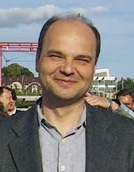
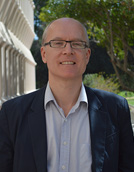
Maxime Bey-Rozet Assistant Professor of European Languages and Studies; French |
![]() |
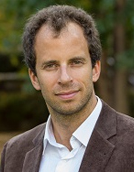
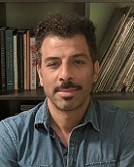
Anke Biendarra Associate Professor European Languages and Studies; German; Chair of European Languages and Studies |
![]() |
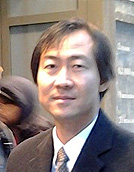
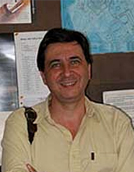
Philip Broadbent Assistant Professor of Teaching of European Languages and Studies; German; Director of the German Language Program |
![]() |
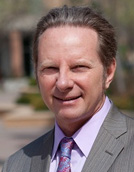
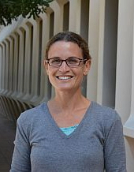
Kai Evers Associate Professor of European Languages and Studies; German; Director of European Studies |
![]() |
Christophe Litwin Associate Professor of European Languages and Studies and Philosophy; French; German Joint Faculty; Director of French |
![]() |
Catherine Malabou Professor of Comparative Literature and European Languages and Studies; French; German Joint Faculty |
![]() |
Pantalea Mazzitello Assistant Professor of Teaching of European Languages and Studies; Italian. Director of the Italian Language Program |
![]() |
David Pan Professor of European Languages and Studies; German; Director of German; Director of Graduate Studies |
![]() |
Georges Van Den Abbeele Professor of Comparative Literature, English, and European Languages and Studies; French |
Interdisciplinary Joint Teaching Faculty
In addition to the Core Faculty of European Languages and Studies, the MA in European Thought and Culture draws on colleagues from the campus at large who focus on Europe in the world in the areas of literary studies, political theory, and intellectual and cultural history broadly conceived.
![]() |
Elizabeth Allen Associate Professor of English; M.A in. European Thought and Culture Interdisciplinary Joint Faculty |
|
![]() |
David Brodbeck Professor of Music; M.A. in European Thought and Culture Interdisciplinary Joint Faculty |
|
![]() |
Daniel R. Brunstetter Associate Professor of Political Science; M.A. in European Thought and Culture Interdisciplinary Joint Faculty |
|
![]() |
Ian Coller Associate Professor of History; M.A in. European Thought and Culture Interdisciplinary Joint Faculty |
|
![]() |
Herschel Farbman Associate Professor and Chair of Comparative Literature; M.A. in European Thought and Culture Interdisciplinary Joint Faculty |
|
![]() |
Zina Giannopoulou Associate Professor of Classics; M.A in. European Thought and Culture Interdisciplinary Joint Faculty |
|
![]() |
Sara Wallace Goodman Associate Professor of Political Science; M.A in. European Thought and Culture Interdisciplinary Joint Faculty |
|
![]() |
Rebeca Helfer Associate Professor of English; M.A in. European Thought and Culture Interdisciplinary Joint Faculty |
|
![]() |
Felix Jean-Louis III Assistant Professor of History; M.A in. European Thought and Culture Interdisciplinary Joint Faculty |
|
![]() |
Andromache Karanika Associate Professor of Classics; M.A in. European Thought and Culture Interdisciplinary Joint Faculty |
|
![]() |
Horacio Legras Associate Professor of Spanish and Portuguese; M.A in. European Thought and Culture Interdisciplinary Joint Faculty |
|
![]() |
Nancy McLoughlin Associate Professor of History; M.A in. European Thought and Culture Interdisciplinary Joint Faculty |
|
![]() |
Susan Morrissey Professor of History; M.A in. European Thought and Culture Interdisciplinary Joint Faculty |
|
![]() |
Kevin Olson Professor of Political Science; M.A in. European Thought and Culture Interdisciplinary Joint Faculty |
|
![]() |
Renee Raphael Associate Professor of History; M.A in. European Thought and Culture Interdisciplinary Joint Faculty |
|
![]() |
James Robertson Assistant Professor of History; M.A. in European Thought and Culture Interdisciplinary Joint Faculty |
|
![]() |
James Steintrager Professor of English; M.A in. European Thought and Culture Interdisciplinary Joint Faculty |
|
![]() |
Andrew Zissos Professor of Classics; M.A in. European Thought and Culture Interdisciplinary Joint Faculty |
Our program will provide a way for students to enhance their resumes by expanding their knowledge in one European language and literature so that they will have a broader understanding of European-wide traditions and issues. As such, the program offers students a way of building their B.A. into a more advanced qualification that would open up more opportunities to them, permitting them to teach at either community colleges or private high schools, or to apply to Ph.D. programs.
The program will also provide preparation for students who are interested in working in business, government, or non-profit organizations. An increasingly globalized marketplace favors students with deep understanding of the history and culture of Europe. Below are some resources for students interested in a variety of careers.
Business
Contact the German American Business Association (www.gaba-network.org/socal/) to sign up for their mailing list and see their schedule of networking events.
Though catering mainly to businesses, the French American Chamber of Commerce of Los Angeles (www.facclosangeles.org/) and of San Diego (www.france-sandiego.org/) both organize networking events.
Government
The Office of the Director of National Intelligence (www.dni.gov/index.php/about/organization/foreign-language) lists opportunities with the National Language Service Corps, Department of State Consular Fellows Program, and the Thomas R. Pickering Foreign Affairs Fellowship.
The State Department values skills such as “Cultural Adaptability,” “Oral Communication,” and “Written Communication” as qualifications for becoming a Foreign Service Officer. In addition, they list French, German, Italian, and Russian as desired languages that they would like to see in their job candidates.
The Defense Intelligence Agency offers careers for students graduating with degrees in “Language” and “Foreign Area Studies” and specifies French, German, and Russian as desired languages for their candidates. They also offer summer internships.
The Central Intelligence Agency has career tracks for Political Analysts, and Foreign Language Officers and Instrurctors, for which foreign language training is an excellent preparation.
The National Security Agency has career tracks for Language Analysts and Intelligence Analysts and Collectors with education or experience in a foreign language and/or education in International Affairs/Relations/Studies.