

Alumni Through the Decades: 1980s
The 1980s marked a period when UC Irvine’s graduate programs were establishing their reputation for academic excellence. Our 60th anniversary alumni series continues with Kent Baldner ‘85 (Ph.D. philosophy), who discovered his passion for philosophy almost by accident when he took a class at Cal State Northridge thinking it fulfilled a general education requirement. Spoiler alert: it didn’t, but he was already hooked.
After earning his doctorate from UCI, Baldner navigated a tight academic job market before landing a tenure-track position at Western Michigan University, where he taught in the Philosophy Department for three decades. In retirement, he’s found a new classroom in Sedona, Arizona, leading philosophy-focused hiking tours that encourage people to explore ideas while connecting with nature.
What inspired you to choose your specific major and career path?
I took my first philosophy class at Cal State Northridge thinking I needed it for general education requirements. (I did not.) I was hooked immediately. I was a nerdy guy who loved to argue about abstract issues, and I did well in the classroom. I was fortunate enough to live during a time when I could study something just for the fun of learning, and that’s what I did. I had my own apartment and worked in a grocery store to put myself through college. In spite of having no career path other than learning for fun, ultimately I was able to make a living doing just that. And that is because of the time spent studying philosophy at UC Irvine.
What made you choose UCI for your advanced degree?
After I took a few philosophy classes, one of my favorite professors suggested that I should go to grad school in philosophy (I didn’t even know such a thing was possible). He was then co-authoring a book with a faculty member in the Department of Philosophy at UC Irvine, and urged me to apply there.
Irvine was only 70 miles down the road from Northridge, so I went there and met the faculty. Honestly, I didn’t know enough to be intimidated by the world-class philosophers I met that day. Instead, they made me feel welcome and at home. That sold me. I was pleased to be accepted into the program, and doubly so to receive an offer of financial support. I couldn’t wait to start classes. I quit my job at the grocery store, moved to Irvine and started learning how to live on my monthly stipend of $540!
How did you spend your free time as a student? What were some of your favorite spots on and off campus?
Starting graduate school was intimidating. I was accustomed to being one of the best students in the classes I took, but now I was surrounded by students who all seemed much smarter and better prepared than me, and, worse yet, willing to work day and night in order to succeed. I had to step up my game.
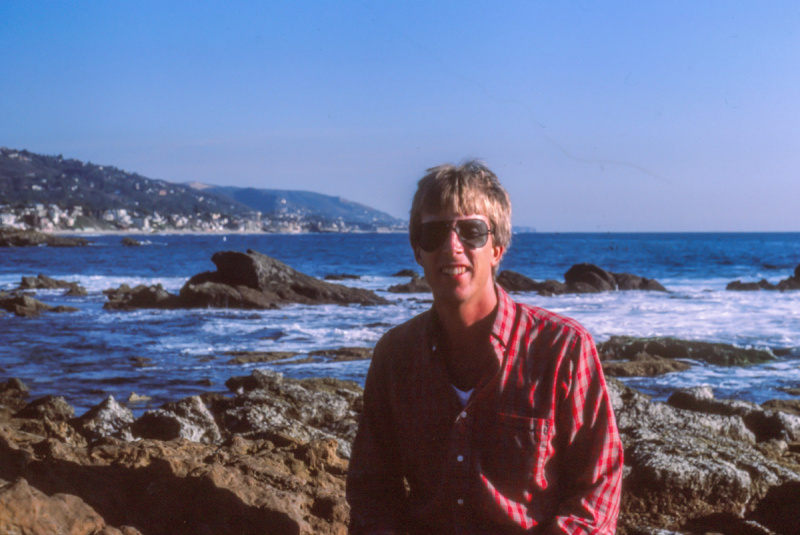
At first, I lived in an apartment in Costa Mesa, and what free time I had I spent walking down to the beach and enjoying all the natural beauty. I did a lot of walking (A philosopher has to spend time thinking, right?). Later, I moved into married student housing on the edge of campus. I would go walking in the green space that used to surround campus — that is, when I wasn’t being chased by the cattle that still grazed there
What was student life and the campus culture like when you attended?
Student life was life in the department. It was a challenging yet friendly place. Everyone was on a first-name basis. It never occurred to me to address anyone as “Doctor So-and-So.” We were all just people studying philosophy together. There were Friday afternoon departmental volleyball games, and occasional evenings playing poker. (Life lesson: do not play poker with logicians.)
One fond memory I often share concerns the beginning of my second year in the program when I was preparing to lead my first section as a teaching assistant. I asked one of the more seasoned grad students (one year my senior) about how to handle my nervousness in the classroom. He said not to worry about it. All of the students, he said, would be equally nervous about taking their first course at a university, and so they would never even notice. That helped me. It wasn’t all about me!
Looking back, how do you think your UCI education impacted your life and career path after graduation?
Well, I left with a Ph.D. in philosophy, and I pursued and eventually obtained a tenure-track position in a philosophy department. So, in that sense, the impact has been huge. It trained me for my professional career as a professor of philosophy.
But more than the education in philosophy, from this point in time, I see how much the collegiality and professionalism of the department helped us all to emerge seeing ourselves as young professionals. We needed that as we faced the uncertainties of the brutal job market that awaited us.
I formed many life-long bonds during my time at Irvine. Some were and continue to be professional mentors and well as personal friends.
What advice would you give current UCI students and soon-to-be alumni?

We were students in the humanities. What better advice than: Nurture a life-long love of learning! That’s what drew us all into the humanities to begin with, and those are the skills we developed. More than ever, we need people with a love of the humanities to share this love with others.
Finally, do what you love! I know it is harder and harder now to pursue higher education for anything other than financial considerations. But look at me. I was a philosophy major, after all. And here I am now having retired from a career as a professional philosopher, living in Sedona, Arizona, working as a tour guide walking through the red rocks and talking about Socrates! Of course you have to work hard. Everything requires that. But as you work to feed your body, don’t forget how rewarding it is to feed your mind and your soul. Keep thinking!
Interested in reading more from the School of Humanities? Sign up for our monthly newsletter.